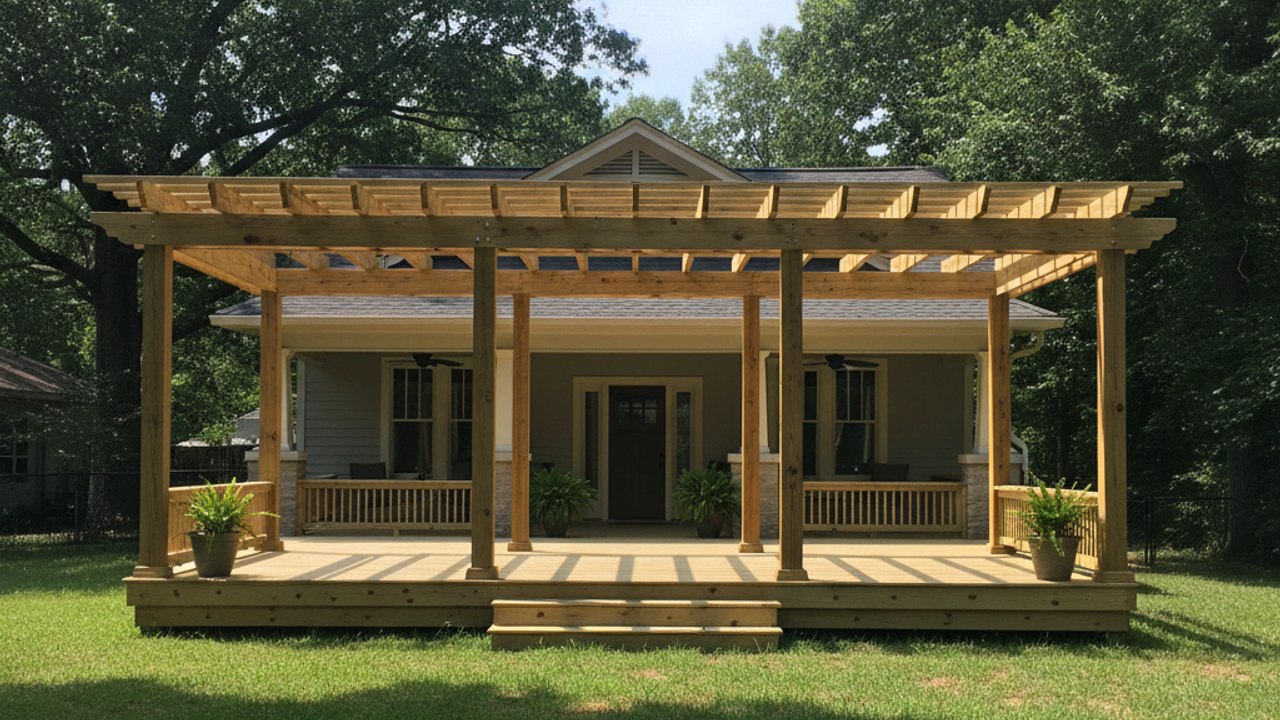
A deck is one of the few home projects where the mistakes don't show up right away. A bad ledger attachment or a footing set too shallow can hold fine for two or three years before a board starts to bounce or a post starts to lean. By then the builder who cut the corner is long gone. Knowing what to ask before you sign anything is the whole game.
Start with what's under the deck, not on top of it
Mobile sits on a mix of sandy loam and softer fill soil, especially in the older parts of town and anywhere near Three Mile Creek or the bayous that cut through the county. That ground drains fast when it's sandy, but it also shifts more than clay does when it's saturated, and we get plenty of saturation between June and September. A footing that's poured too shallow, or one that's just a bag of concrete dumped in a hole without real diameter, will move over a couple of rainy seasons. Ask how deep the footings go and whether they're resting on undisturbed soil or on fill dirt from when the lot was graded. For most decks in this area you want footings at least 24 inches down, wider at the base than a sonotube alone gives you, especially if the deck is more than a foot or two off the ground.
Ask about hurricane straps and post-to-beam connections too. Mobile doesn't get hard freezes that heave concrete, but it gets 60-plus mph gusts most years and a direct hit from a named storm every few years. A deck attached with nails and good intentions instead of galvanized hardware rated for wind uplift is a deck that ends up in the neighbor's yard.
Permits aren't optional, and a builder who skips them is telling you something
If your property is inside the city limits, deck work over a certain size or height typically needs a permit through the City of Mobile's building inspection process, and an inspector will want to look at the footings before they're poured over and at the framing before the decking goes down. If you're in unincorporated Mobile County, the permitting runs through the county instead. Either way, a licensed contractor pulls the permit as a matter of course. It's not extra red tape, it's the same inspection that protects you if you ever sell the house and a buyer's inspector starts asking questions about the deck's footings.
Newer subdivisions out toward West Mobile and Tillman's Corner often have an HOA on top of that, with its own setback and railing height rules. Older neighborhoods like Midtown, Oakleigh, and Spring Hill usually don't, but the houses are older too, which means the ledger board is going into original framing that may have already seen sixty or seventy years of humidity. That's worth checking before you fall in love with a design.
Ask what they'll do about the house itself, not just the deck
The ledger board, the piece that bolts the deck to your house, is where most deck failures actually start. It needs flashing behind it so water doesn't run down into your wall sheathing, and it needs lag bolts or structural screws into real framing, not just into siding or brick veneer with a few masonry anchors and a shrug. If a builder can't explain how they're flashing the ledger and what they're bolting into, that's a real gap, not a small one.
Termites are a fact of life in south Alabama, and a deck built tight against a house without any gap for inspection or treatment access is asking for trouble down the line. A builder who's dealt with this before will leave clearance and use pressure-treated lumber rated for ground contact anywhere wood touches soil or sits close to it.
Material choice changes the maintenance conversation
Pressure-treated pine is still the most common decking around here because it's cheap and it holds up if it's sealed. But Mobile's humidity is brutal on wood. Boards that aren't sealed within the first year will start to check and cup, and a deck that isn't restained every two to three years will gray out and start splintering faster than people expect. Composite decking costs more up front, sometimes close to double the material cost of pine, but it doesn't need staining and it handles our humidity and afternoon thunderstorms without warping the way wood can. Neither one is the wrong answer. What matters is that the builder tells you honestly what the upkeep looks like instead of letting you assume a deck is a one-time purchase.
If you're adding a screened porch instead of an open deck, ask about the roof tie-in and gutter work, because Mobile's rain doesn't come lightly. A poorly flashed porch roof against an existing roofline is a leak waiting for the right storm.
Red flags worth walking away from
- No written contract with a materials list, only a verbal price
- Reluctance to talk about permits, or a claim that "nobody pulls permits for decks around here"
- A quote that's dramatically lower than two or three others for the same square footage and material
- Asking for full payment up front before any work starts
- No mention of footing depth, ledger flashing, or hardware when you ask directly
None of these alone is automatically disqualifying, but two or three together should slow you down. A contractor who's confident in their work will usually walk you through the framing plan without being asked twice.
Comparing bids the right way
Get at least two or three quotes and put them side by side by material, not just total price. A $9,000 bid and a $6,500 bid aren't comparable if one uses composite decking on treated pine framing and the other is pine top to bottom with a smaller footing schedule. Ask each builder for their license and insurance information and actually call to verify it rather than taking a business card at face value. And ask how long the job will take. A simple 12x16 deck with standard framing usually runs one to two weeks from footing pours to final decking, weather depending, and Mobile's summer thunderstorms will push that timeline more often than not. A builder who promises it in three days regardless of weather is either rushing the footings or not being straight with you.
We build and repair decks, porches, and pergolas around Mobile and the surrounding towns, and we're glad to walk through footing depth, permit questions, or material tradeoffs before you sign anything. You can see more about our deck builder work and how we approach jobs in this area.